




Exploring how digital tools, game-based learning, peer support and inclusive practices can strengthen meaningful youth participation.
The second cycle of the MVI Academy moves from foundations to practice.
It explores how youth workers can create environments where young people do not simply receive information, but actively participate, collaborate, learn from one another and take initiative.
Cycle 2 in practice: job shadowing and practitioner exchange
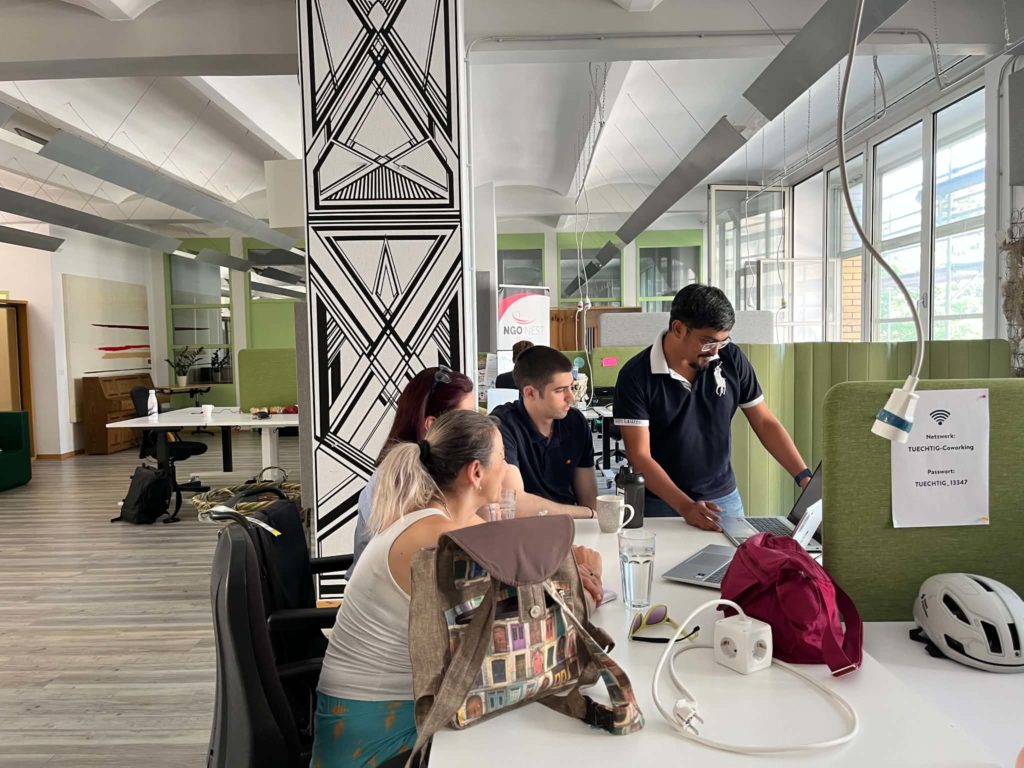
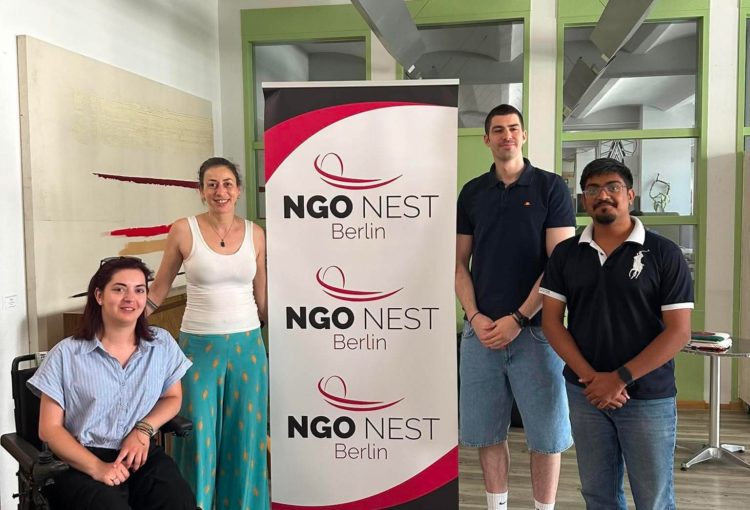
Cycle 2 was developed during a job-shadowing activity organised by NGO NEST Berlin, which hosted staff members from the Greek organisation LOUD Art & Inclusion. The exchange created a practical space for observation, dialogue and reflection on how participation can be made more accessible, interactive and inclusive.
NGO NEST Berlin works as a hub for European projects and non-formal education, while LOUD Art & Inclusion brings experience in inclusive education, creative practice and the empowerment of persons with disabilities. Bringing these perspectives together gave Cycle 2 a strong practice-based dimension.
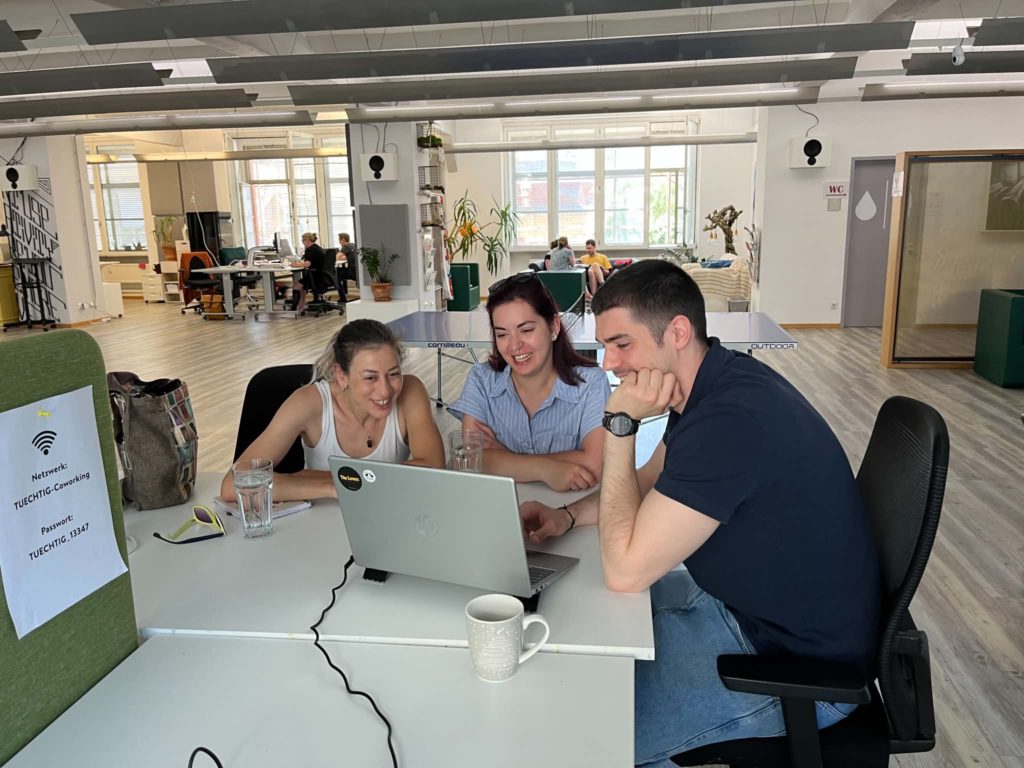
During the job shadowing experience, a focus group was conducted with visiting staff members and youth workers from germany and Italy. Their reflections provided the qualitative basis for the themes explored throughout this cycle: digital engagement, game-based and experiential learning, peer learning, inclusion and the transition from taking part to having a voice.
FIELD-BASED LEARNING
Job shadowing | Practitioner exchange | Focus group
Cycle 2 turns direct observation and practitioner reflection into valuable learning material available through MVI Academy.
From digital access to meaningful engagement
Digital competence is increasingly part of how young people access opportunities, communicate and participate in community life.
The focus group highlighted the importance of practical and accessible digital skills: using social media to discover and share opportunities, finding information online, participating through digital platforms and using everyday tools for communication and collaboration.
Digital engagement, however, is not only about knowing how to use technology. For youth workers, the challenge is to transform digital tools into gateways to participation – making activities more visible, accessible and inclusive while creating opportunities for young people to connect with communities, projects and civic initiatives.
DIGITAL ENGAGEMENT
Access | Communication | Participation
Digital tools can support youth participation when they help young people find opportunities, communicate, collaborate and take part in activities that matter to them.
Learning through interaction
One of the strongest elements emerging from the job-shadowing exchange and focus group is the role of non-formal and game-based learning.
Games, creative activities and interactive challenges can make learning more engaging while allowing participants to develop practical, technical and social competences through experience. Rather than positioning young people as passive learners, these approaches invite them to experiment, solve problems, collaborate and progressively take on more challenging tasks.
For youth workers, gamification is therefore more than making an activity entertaining. It can become a methodology for creating learning experiences that encourage curiosity, motivation and active involvement.
GAMIFICATION & NON-FORMAL EDUCATION
Experience | Creativity | Motivation
Learning becomes more meaningful when participants can explore, interact and develop competences through practical experience.
Learning with – and from – others
Participation is also a social process. Practitioner reflections gathered during Cycle 2 highlighted the value of peer learning, particularly in diverse and inclusive groups where participants support one another during activities.
Working together can create opportunities for knowledge to circulate naturally within a group. Participants can learn by observing others, exchanging experiences, solving problems together and providing mutual support.
At the same time, effective peer learning requires balance. Supporting another participant should not mean taking over their learning process. Youth workers and facilitators therefore play an important role in creating environments where mutual assistance strengthens – rather than replaces – individual autonomy.
PEER LEARNING
Collaboration | Mutual Support | Autonomy
The group becomes a learning resource when participants have the space to contribute, support others and develop independently.
Inclusion as a condition for participation
Meaningful participation cannot exist without inclusion.
The joint reflections between German, Italian and Greek youth workers and trainers reinforced the importance of creating environments where people with different abilities, backgrounds and learning needs can participate together. Accessibility involves both physical and digital spaces. It also depends on how activities are designed, how information is communicated and how facilitators respond to different levels of experience and confidence.
Inclusive youth work therefore goes beyond providing access. It means designing participation so that everyone has a genuine opportunity to contribute.
INCLUSION
Accessibility | Equal Participation | Empowerment
Inclusive environments enable young people to participate according to their abilities while remaining active contributors to the group.
From taking part to having a voice
A recurring question throughout Cycle 2 is the difference between participating in an activity and participating in civic life.
Workshops, projects and digital communication can provide important entry points. They allow young people to discover opportunities, meet others and become involved. The next step is to create clearer pathways from engagement towards agency and decision-making.
How can young people contribute ideas? |
How can they influence activities that concern them? |
How can youth organisations create spaces where young people are not only participants, but also contributors and decision-makers? |
These questions connect everyday youth work with the wider principles of active citizenship, democracy, participation and youth empowerment.
What Cycle 2 brings to the Academy
The Academy is built through co-creation. In Cycle 2, job shadowing and focus-group discussion became a way of capturing practitioner knowledge: observations and reflections from the field are not treated as isolated experiences, but as learning material that can inform future training activities and practical resources for youth workers.
Cycle 2 contributes to this process by identifying four interconnected areas:
- Digital engagement:Using accessible digital tools to connect young people with information, opportunities and communities.
- Interactive and game-based learning:Creating engaging learning environments through non-formal, creative and experiential methods.
- Peer learning:Using collaboration and mutual support while maintaining space for individual autonomy.
- Inclusive participation:Designing activities and environments in which different participants can access, contribute and engage meaningfully.
Together, these insights help the Academy move from theory towards methods that can be adapted and applied in real youth-work settings.
Turning experience into practical resources
The learning generated through Cycle 2 will contribute to the continued development of the MVI Academy curriculum, the Engagement Toolkit and the collection of good practices and case studies.
The objective is not to prescribe one model of youth engagement. Instead, the Academy brings together experiences from different organisations and contexts, identifies what works, reflects on existing challenges and transforms this shared knowledge into practical resources that youth workers can adapt to their own communities.
Meaningful participation grows when young people have access, opportunities, supportive environments and real space to act.
Cycle 2 at a glance
DIGITAL ENGAGEMENT | Making opportunities accessible and participation easier. |
GAMIFICATION | Turning learning into an active and engaging experience. |
PEER LEARNING | Building knowledge through collaboration and exchange. |
INCLUSION | Creating spaces where everyone can participate. |
ACTIVE CITIZENSHIP | Moving from taking part to having a voice. |
From insight to impact
Cycle 2 reinforces a central idea of the Academy: Skills for Engagement & Impact: effective youth engagement starts by listening to practice.
By combining job shadowing, practitioner exchange and focus-group reflection, the Academy can transform knowledge from the field into tools for stronger, more inclusive and meaningful participation.