


The third cycle of the MVI Academy “Skills for Engagement & Impact” moved into a school. On 28 October 2026, Cycle 3 of the Academy “Skills for Engagement & Impact” took place at the ROTH School in Alghero, Sardinia. MV International (MVI) took part in a national information day on innovative ways of education with a session on communication, inclusion and digital storytelling, attended by 29 participants.
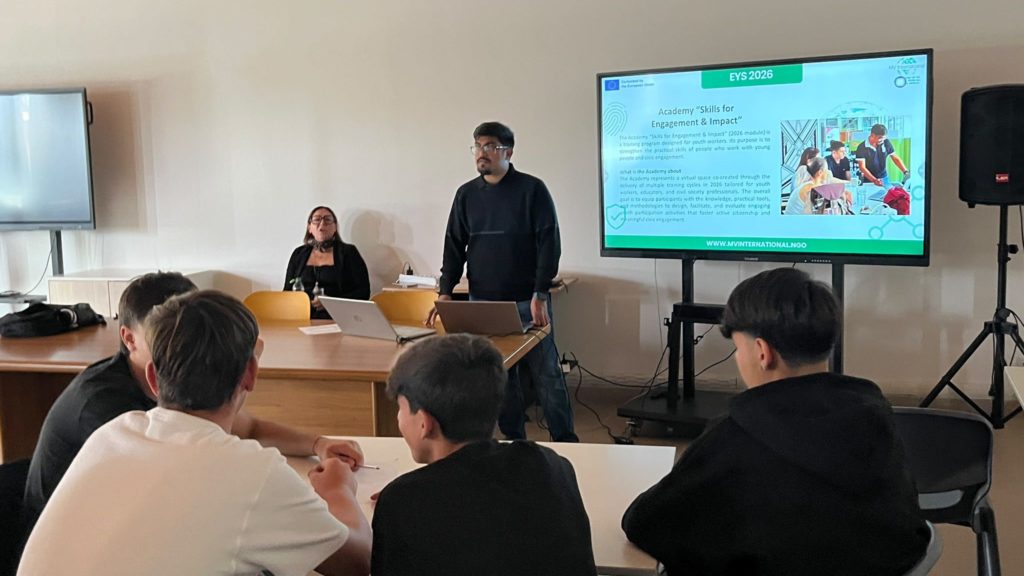
Cycle 3 in practice: bringing the Academy into a school
The information day at the ROTH School focused on new ways of teaching in school education. Cycle 3 added a complementary perspective: whatever the subject, learning works best when every young person can take part, be heard and see their strengths recognised.
MVI’s contribution looked at questions that matter to anyone who works with young people: how to understand the barriers to inclusion and participation that some young people face, how to build confidence in communication, and how to make personal strengths visible to others. Bringing the Academy to a school meant sharing these questions with the adults who accompany young people every day.
Cycle 3 at a glance
- Inclusion and participation: understanding the challenges young migrants may face.
- Communication: confidence in expressing ideas and speaking in front of others.
- Skills and strengths: identifying and presenting skills that matter for employment.
- Storytelling: using stories to promote inclusion and highlight people’s experiences and strengths.
- Digital storytelling: communicating skills, experiences and stories with digital tools.
- Collaborative learning: learning from others through practical activities.
Why communication and storytelling?
The first cycles of the Academy looked at digital citizenship, digital engagement and participation. Cycle 3 builds on them by asking a practical question: how can people be heard, and how can their strengths be recognised? Communication and storytelling are tools for both. A young person who can present their skills with confidence, and an educator who knows how to help them do it, can open doors that stay closed when skills remain invisible.
Storytelling also connects the Academy’s digital and inclusion themes. Digital tools let people share their stories beyond school, which makes consent, respect and accessibility part of the same lesson.
Three ideas for educators and youth workers
- Make skills visible. Help young people name what they are good at, including skills they gain outside school, and practise presenting them.
- Create safe spaces to practise speaking. Confidence in communication grows through repeated, low-pressure practice.
- Use stories, and use them responsibly. Personal and digital stories can show strengths and challenge stereotypes, as long as people choose what to share and how.
What Cycle 3 brings to the Academy
Like the other cycles, Cycle 3 is a source of learning for the Academy’s shared resources. It contributes in three ways:
- A school setting: it shows how Academy themes can be brought to schools and to the adults who work in them.
- Practical ideas on inclusion and communication: approaches that educators and youth workers can adapt to their own groups.
- A link between digital engagement and inclusion: digital storytelling connects the digital themes of the Academy with its focus on inclusion and participation.
The Academy’s aim is not to prescribe one model. It brings together experience from different organisations and contexts, identifies what works and turns it into practical resources that youth workers and educators can adapt to their own communities.
Join the Academy
Do you work in a school, a youth organisation or a community project that strengthens inclusion, communication or youth participation? Share it with the Academy. You can download the case study template and the testimonial guide on the Academy page and send your completed documents to secretary@mvinternational.info. You can also explore the 20 case studies from across Europe already collected for the Academy.